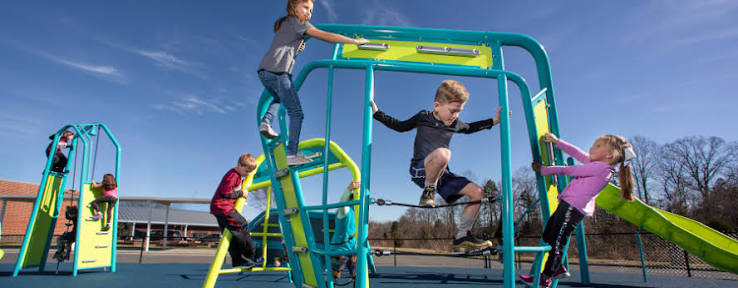
Recess is unstructured time by design, but a little bit of structure behind the scenes is often what turns a quiet playground into one where every student finds something to do.
Walk past most school playgrounds during recess and you’ll usually see the same pattern repeat itself: a cluster of kids playing an organized game near the equipment, a larger group running freely across the open field, and a smaller group standing along the fence line with nothing in particular to do. That last group is often the one most in need of an activity boost, and it’s also the easiest to overlook, because recess is meant to be unsupervised free time rather than a scheduled activity block.
The schools that manage to shrink that fence-line group don’t do it by forcing participation or turning recess into another structured class. They do it by making it easier for students to find something to join on their own, without needing to organize it themselves or feel singled out for standing apart from the crowd.
Thinking of the Playground in Zones
One simple shift many schools make is treating the playground as a set of zones rather than one open space where everyone is expected to find their own fun. This gives students with different comfort levels and energy levels a natural place to head toward, instead of defaulting to standing around near the doors because nothing obvious is happening.
A high-energy zone
An area set aside for tag games, running games, and larger group activities gives students who want to burn off energy a clear place to do it without disrupting quieter play nearby.
A skill zone
Skipping ropes, hula hoops, ball skills, and hopscotch grids give students who prefer individual or small-group activity a low-pressure way to stay active at their own pace.
A quiet zone
A walking loop, a chalk art corner, or a calm conversation space gives students who need a break from noise and crowds somewhere to go that still keeps them outdoors and moving a little.
A shared boundary system
Marking each zone clearly — with cones, painted lines, or simple signage — helps younger students understand where each type of activity happens without needing a supervisor to explain it every day.
A student who feels unsure about joining a big group game is far more likely to try a smaller, low-pressure activity if one is clearly available and clearly labelled.
Why This Approach Reaches More Students
It’s easy to assume that a playground either “has activity” or it doesn’t, but the reality is usually more specific than that. Most playgrounds already have plenty of activity happening — the issue is that it tends to be concentrated among a handful of confident, socially established students, while everyone else is left to either watch or wander. Zoning the playground doesn’t create new activity out of nothing; it simply redistributes the activity that’s already there so more students can access it.
This matters because the students standing along the fence line aren’t necessarily uninterested in moving. Many of them are simply waiting for an obvious, low-risk way to join something, and a wide-open field with one dominant game doesn’t offer that. A clearly marked skill zone with a bin of skipping ropes does.
“The goal isn’t to schedule recess — it’s to remove the guesswork so every student has an obvious place to go.”
A common theme among Saskatchewan recess-improvement programsIdeas That Increase Participation Without Much Cost
A recess equipment cart
A simple bin of balls, ropes, and hoops that students can borrow and return keeps activity options available to everyone, not just those who happen to bring their own gear from home.
Painted games on pavement
Hopscotch grids, four-square courts, and simple game boards painted directly onto the ground cost very little up front and last for years with almost no maintenance.
Peer activity leaders
Older students trained to run a game for younger grades give shy or less confident kids an easy way to join something that’s already in motion, rather than having to start a game themselves.
A rotating “game of the week”
Introducing one new game each week, taught briefly beforehand by a teacher or peer leader, keeps recess feeling fresh and gives quieter students a natural reason to try something new alongside their classmates.
What Supervising Staff Can Do Differently
Supervisors don’t need to organize every game, and most schools don’t have the staffing to do that even if they wanted to. But a small amount of active encouragement makes a noticeable difference to how recess actually plays out. Simply pointing a hesitant student toward an open activity, or occasionally kicking off a quick group game to get momentum going, can shift a student’s whole recess experience without requiring a formal program or extra training.
Schools that brief their supervision staff on this approach — even with something as simple as a five-minute conversation at a staff meeting — tend to see steadier participation across the school year than schools that treat supervision purely as a safety role. The difference isn’t in how much staff intervene, but in how they use the small windows of attention they already have during a duty shift.
Low-Cost Equipment Worth Having on Hand
None of the equipment that supports an active recess needs to come from a large budget line. Most of it can be stored in a single labelled bin near the playground door and checked out the same way library books are.
- Skipping ropes in a few different lengths
- Playground balls of varying sizes
- Hula hoops for individual or partner games
- Sidewalk chalk for pavement art and games
- Bean bags for toss and target games
- Cones for marking zone boundaries
Schools that start with even a fraction of this list tend to find that the equipment gets used almost immediately, often within the first week it’s introduced, which makes it one of the fastest, lowest-risk changes a school can make to its recess routine.
A Change Students Notice Quickly
Unlike changes to curriculum, which can take a full school year to show measurable results, changes to recess tend to show up almost immediately. Students notice a new painted game on the pavement within days, and equipment carts are usually put to use the same week they appear. Because recess repeats every single school day, even a modest improvement compounds into a meaningful amount of extra activity across a school year — without touching the timetable, the curriculum, or the PE schedule at all.
This is part of what makes recess such an attractive place to start for schools that want to increase activity levels but don’t have room in the budget or the calendar for a bigger initiative. It’s low-risk, low-cost, and the results are visible almost right away — which also makes it easier to get buy-in from staff, students, and parents alike.
Common Mistakes Schools Make With Recess Changes
A few habits tend to blunt the impact of even well-intentioned recess improvements.
- 1Introducing too much at once. Rolling out zones, an equipment cart, and peer leaders all in the same week overwhelms both students and supervising staff — a phased rollout works better.
- 2Not replacing lost or damaged equipment. An empty equipment bin a few weeks in undoes most of the goodwill the change created — a simple restocking routine keeps it working.
- 3Assuming younger grades don’t need zone signage. Younger students especially benefit from clear, simple markers showing where each type of activity happens.
- 4Treating peer leader training as a one-time event. A quick refresher each term keeps peer leaders confident and keeps the program from fading out partway through the year.
Frequently Asked Questions
Common questions from parents, teachers, and administrators about making recess more active.
Does zoning the playground require special equipment or fencing?
No — most schools start with cones, painted lines, or simple signage to mark each zone. No permanent construction or fencing is needed to get started.
How do we choose which students become peer activity leaders?
Many schools open it up to any interested older student and provide a short training session, rather than limiting it to students who are already athletic or outgoing — this keeps the leadership role accessible to a wider range of students.
What if our school doesn’t have a budget for new equipment?
A basic equipment cart can start with donated or gently used items from families, and painted pavement games often qualify for small community or parent-council grants, so the cost barrier is usually lower than it first appears.
How long does it take to see a difference in student participation?
Most schools notice a shift within the first few weeks, since equipment and new games tend to be used almost as soon as they’re introduced, unlike changes that depend on a full school term to take effect.
Do supervising staff need formal training to support this approach?
No formal training is required — a short briefing on encouraging hesitant students toward open activities is usually enough to make a noticeable difference during regular duty shifts.