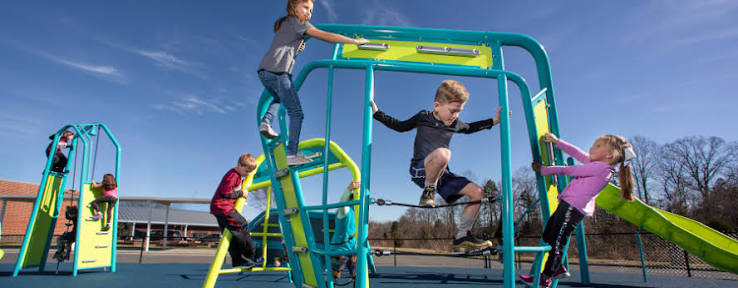
A province-wide look at how Physical Education is actually being delivered in Saskatchewan classrooms offers a useful reality check for schools, teachers, and parents alike.
Surveys about how schools deliver Physical Education rarely make headlines, but they quietly shape a lot of what happens in classrooms afterward. Saskatchewan’s provincial survey on Physical Education, conducted alongside Saskatchewan in motion, the Ministry of Education, and the University of Saskatchewan, gathered information directly from schools on how PE is delivered and how healthy eating and activity are encouraged more broadly.
For anyone involved in a school community — teachers, administrators, or parents — the value isn’t in any single statistic, but in the honest picture it paints of where things stand today. Rather than treating this kind of research as an academic exercise, it’s worth reading with a practical question in mind: what does this actually change about how a school runs its week?
What Surveys Like This Typically Reveal
Provincial surveys of this kind tend to surface the same handful of patterns year after year, and this one was no exception. Four findings in particular stand out for how directly they affect the day-to-day experience of students.
Delivery varies widely between schools
The amount and style of PE instruction differs significantly depending on grade level, school size, and whether a dedicated PE specialist is on staff. Two schools in the same town can offer noticeably different PE experiences for this reason alone.
Non-specialist teachers deliver much of elementary PE
Classroom teachers without specific PE training often take on this responsibility, which affects both confidence and the variety of activities offered. This isn’t a reflection of effort — it’s a reflection of staffing realities in many Saskatchewan schools.
Healthy eating and activity are often addressed together
Schools frequently pair physical activity initiatives with nutrition education, treating them as connected parts of student wellbeing rather than separate topics handled by different staff or programs.
Resources and time remain the biggest constraints
Facility access, equipment budgets, and scheduling pressure are consistently the factors schools point to when explaining gaps in PE delivery, more so than a lack of interest or effort.
Understanding where the gaps are is what makes it possible to target support — training, resources, or shared activity guides — where they’re actually needed most.
Why This Kind of Data Matters to Families, Not Just Schools
It’s easy to assume a child’s PE experience is roughly the same everywhere, but survey findings consistently show that isn’t quite true. A student in one school might get regular, well-resourced PE instruction, while a student in another relies more heavily on a classroom teacher improvising with limited equipment. Neither situation reflects a lack of effort — it reflects real differences in staffing and resources between schools.
For parents, this context is useful for understanding what support their school might benefit from, and for engaging constructively with staff about what’s working and what could use more attention. A parent who understands that a school’s PE program depends heavily on which staff member happens to be assigned to it, for instance, is better positioned to ask useful questions at a parent council meeting than one who assumes every school delivers PE identically.
“The goal of gathering this information isn’t to rank schools against each other — it’s to understand where support is needed most.”
A common theme across provincial education researchHow Schools Can Act on Findings Like These
A survey is only useful if it changes what happens next. Fortunately, most of the gaps it identifies have fairly practical, low-cost responses that schools of any size can put into action.
Shared activity resources for staffing gaps
Simple, well-tested activity guides help non-specialist teachers run confident, varied PE classes without needing formal training or a background in sport instruction.
Movement outside PE class for scheduling pressure
Short classroom activity breaks help offset limited gym time without requiring changes to the timetable — a five-minute stretch break costs nothing to schedule.
Low-cost activity options for equipment limits
Games that need little more than open space and a few basic items keep activity accessible regardless of budget, which matters most in schools facing the tightest resource constraints.
Peer learning between schools for consistency
Schools that share what’s working with neighbouring schools help close gaps faster than any single school working alone, since much of what works has already been figured out somewhere nearby.
Looking at the Bigger Picture
Data like this is most useful when it’s treated as an ongoing conversation rather than a one-time report. As schools adjust their approach — adding movement breaks, training student leaders, or improving recess equipment — future surveys can show whether those changes are actually closing the gaps identified earlier. That feedback loop is what turns a one-time snapshot into a genuine tool for improving how physical education reaches every student in the province.
It’s also worth remembering that a survey like this captures a moment in time, not a permanent verdict on any individual school. A school with limited resources today can still make meaningful improvements without waiting for a budget increase — often the biggest gains come from small, consistent changes rather than large one-time investments.
There’s a temptation, when reading a survey like this, to focus mainly on the schools doing well and treat them as the standard everyone else should meet. A more useful reading treats those schools as evidence that strong PE delivery is achievable within Saskatchewan’s real-world constraints — not as a benchmark that assumes every school starts from the same position. A rural school with one classroom teacher covering PE for six grades faces a genuinely different set of challenges than a large urban school with a dedicated specialist, and solutions that work well in one context won’t always transfer directly to the other.
The Role of Provincial Partners
Saskatchewan in motion, the Ministry of Education, and the University of Saskatchewan each bring something different to a project like this. The Ministry provides the reach needed to survey schools across the entire province consistently, the University contributes research design and analysis that gives the findings credibility, and Saskatchewan in motion translates the results into practical resources schools can actually use.
This kind of partnership matters because none of the three organizations could produce the same result working alone. A survey without rigorous research design risks producing findings that don’t hold up to scrutiny; research without a distribution partner risks never reaching the schools that could act on it; and a resource organization without reliable data risks guessing at what schools actually need instead of knowing.
Common Mistakes When Interpreting Survey Data Like This
A few habits tend to blunt the usefulness of research like this once it reaches individual schools.
- 1Treating findings as a ranking rather than a diagnostic. The point of the survey is to identify where support is needed, not to compare schools against each other.
- 2Assuming gaps reflect a lack of effort. Most gaps identified in surveys like this trace back to staffing and resource constraints, not to teacher motivation.
- 3Waiting for a large budget before making any changes. Many of the most effective responses — activity guides, movement breaks, peer mentoring — cost very little to implement.
- 4Reading the survey once and setting it aside. The real value comes from checking progress against it again in future years, not treating it as a one-time report.
Frequently Asked Questions
Common questions from parents and educators about Saskatchewan’s Physical Education survey.
Who actually conducted this survey?
The provincial Physical Education survey was conducted in partnership with Saskatchewan in motion, Saskatchewan’s Ministry of Education, and the University of Saskatchewan, drawing on responses gathered directly from schools across the province.
Does the survey identify specific schools by name?
No — the purpose of research like this is to identify province-wide patterns and gaps, not to single out or rank individual schools. Findings are typically reported in aggregate.
How can I find out how my child’s school is doing?
The most direct route is usually a conversation with your school’s administration or parent council, using the survey’s general findings as a starting point for questions about your specific school’s approach.
Will this survey be repeated in future years?
Provincial surveys of this kind are typically repeated periodically so that changes can be tracked over time, though the specific schedule can vary. Checking with the Ministry of Education or Saskatchewan in motion is the best way to confirm the next cycle.
What can parents do with this information beyond asking questions?
Parents can support school-level solutions directly — volunteering to help run a recess activity, donating simple equipment, or supporting a parent council initiative aimed at closing a specific gap the survey highlights.